
Quick Compost
Quick Compost is a concentrated blend of bacteria culture [Bacillus Subtillus] and organic enzymes. Bacillus Subtillus abounds in all soil and is a harmless strain of bacteria that breaks down lawn clippings a short time after mowing.
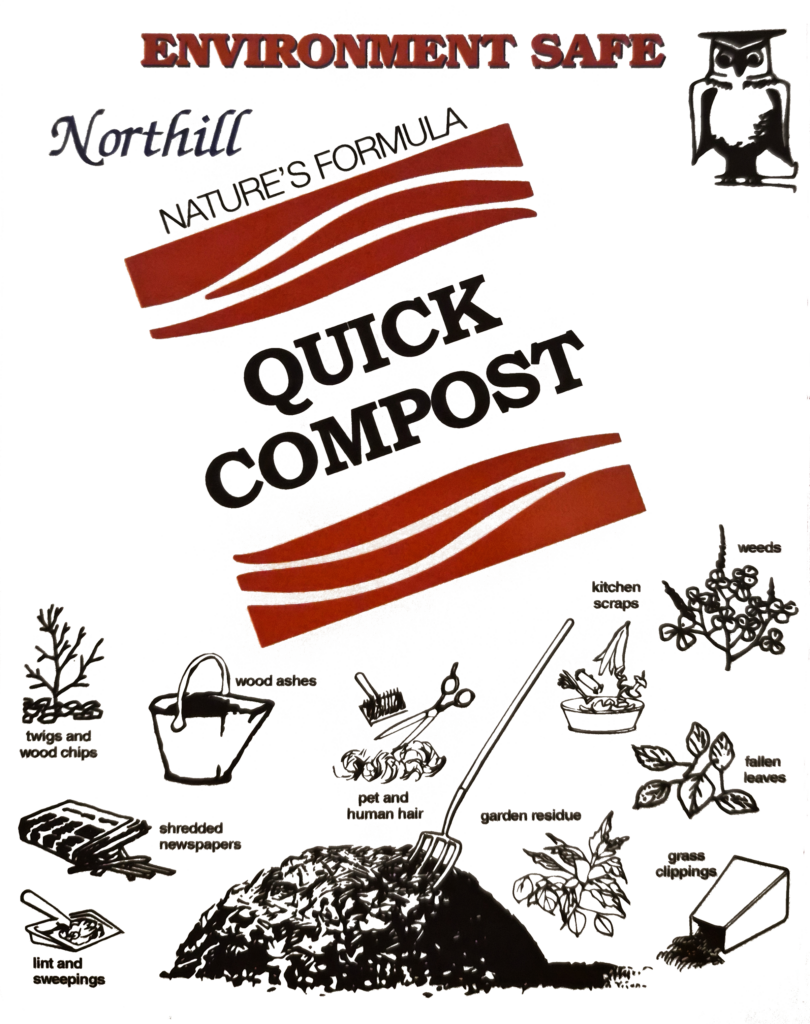
Quick compost makes it easy to make your own pure rich compost. All organic waste such as kitchen leftovers, I meat excluded ] damaged fruits, and vegetables, peelings, grass, leaves, weeds, ect, makes rich compost. Compost grows humis: new top soil, so badly neded in all soils. Compost enriches all plants so they fight the usual diseases and blights, Vegetables grow larger and are tastier. Flowers and shrubs grow large and fast.
DIRECTIONS
Compost pile should be a foot or more deep. MIX ONE TABLESPOON OF QUICK COMPOST PER 4 LITRES OF WATER. Stir well and apply with a garden sprinkling can. Turn material to be composted with a fork or rake so that the wetness is even throughout, This should be repeated in one week. Turning the pile once week speeds composting.
TURNING THE PILE ONCE A WEEK SPEEDS COMPOSTING. Add more water if pile starts to dry out.
Available in 16 oz Jars.
MATERIALS FOR COMPOSTING
It would be impossible to name all the material that may be used for composting. In making compost it should be noted what material stubbornly resists decay, will be correspondingly be slow to disintegrate in the compost pile. It is best to avoid dry, woody material such as corn stalks, sawdust and coarse hedge trimmings. These are very slow to compost and make poor quality, low nitrogen humus. Because of the wide range of materials for composting it is impossible to set a definite date to complete the process, or to state a chemical analysis of the finished product. This will vary with the materials you may use.
SLOW
BETTER
BEST
| Corn Stalks (dry) | Lawn Clippings | Soft Garbage |
| Straw | Green Leaves | Manure |
| Dry Leaves | Green Garden Waste | Rotted Fruits |
| Dry Hay or Weeds | Green Vegetables | Rotted Vegetables |
| Seed Cleaning | Green Weeds | Melon Rinds |
| Coarse Feathers | Spoiled Mixed Feed | Citrus Pulp |
| Pine Needles | Rotten Eggs | Cannery Wastes |
| Pet and Human Hair | Fine Feathers | Wood Ashes |
| Sawdust | Peat Moss | Bone Meal |
| Spoiled Whole Grain | Shredded Newspaper | Coffee Grounds |
MATERIALS TO AVOID
Detrimental
- Coal or Coal Tar Products
- Coal Soot of Coal Ashes
- Oils and Greases
- Salt or Brine
- soaps and Fats
- Pet Droppings
- Acids
- Disinfectants
- Charcoal
Mechanically Obectional
- Coarse Hedge Trimmings
- Gravel
- Glass
- Crockery
- Wood
- Metal
- Large Bones
- Corn Cobs
- Old Shoes
- Rags
- Cotton Waste